




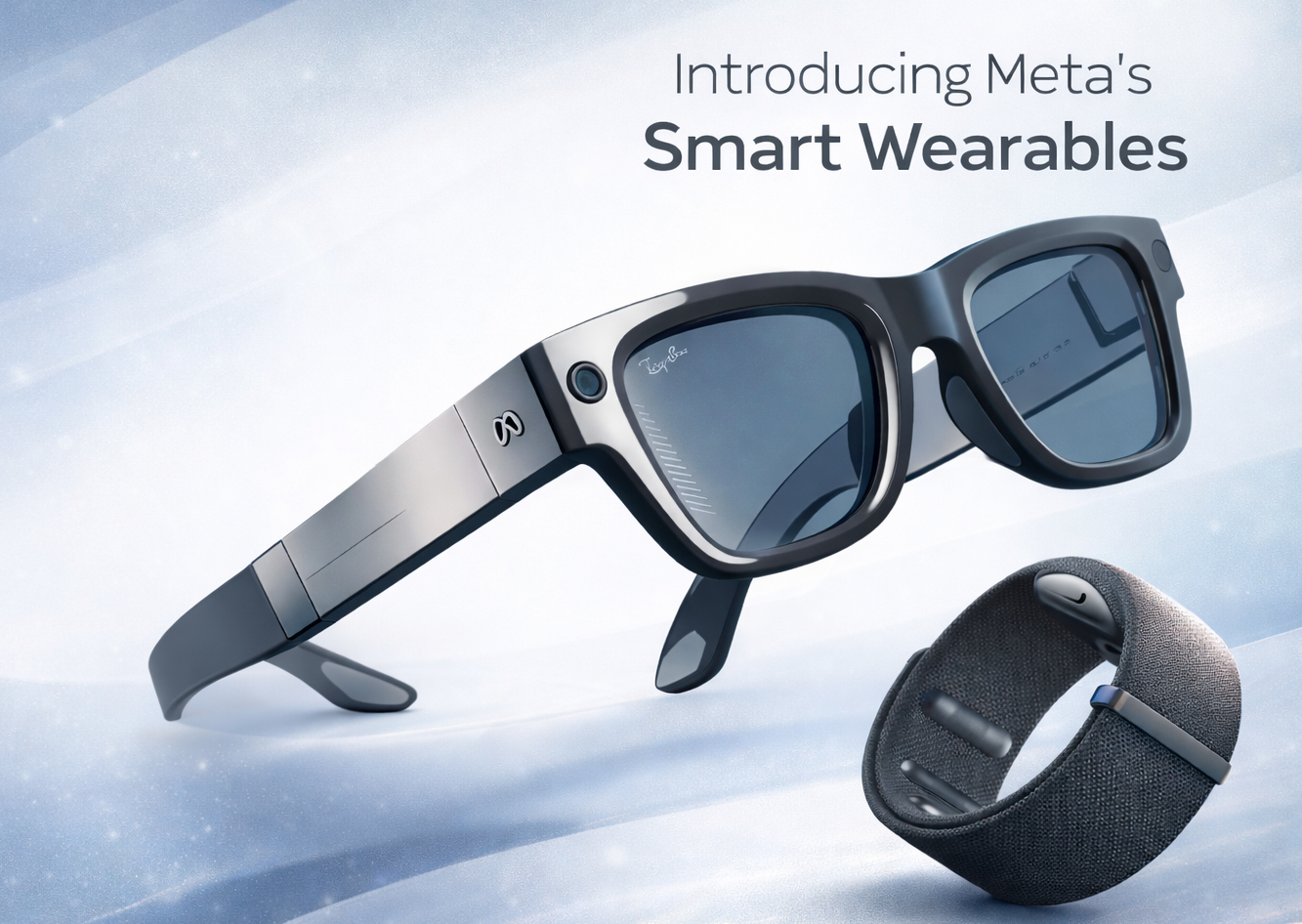
Wearable technology has evolved rapidly over the past decade. What started with basic fitness trackers has now expanded into smartwatches, AR headsets, and voice-enabled assistants. Meta’s latest innovation, Meta Ray-Ban Display, represents a major step forward in this evolution.
These AI-powered smart glasses combine stylish eyewear with a built-in display, advanced artificial intelligence, and a neural wristband for gesture control. Instead of pulling out a phone or tapping a screen, users can interact with digital information naturally, staying present in the real world while remaining connected.
Meta Ray-Ban Display is not just another gadget. It signals a shift toward ambient computing, where technology works quietly in the background and responds only when needed.
What Is a Meta Ray-Ban Display?
Meta Ray-Ban Display is a next-generation pair of smart glasses designed to deliver AI assistance directly into your field of view. Unlike earlier smart glasses that focused mainly on cameras or audio, this version introduces a high-resolution in-lens display paired with a Neural Band that enables hands-free interaction.
The goal is simple, to help users complete everyday tasks, such as messaging, navigation, translations, music control, and AI queries, while staying focused. Instead of constantly switching attention between screens, users can seamlessly access what they need as they move through their day, without breaking their natural flow.
By blending hardware, AI, and intuitive controls, Meta aims to make these glasses feel like a natural extension of the human senses rather than a distracting piece of technology.
A Subtle Yet Powerful In-Lens Display
One of the most important upgrades in Meta Ray-Ban Display is the built-in visual display. Unlike bulky AR headsets, the display is designed to be discreet and non-intrusive.
How the Display Works
- The screen appears only when information is needed
- It is positioned slightly off-center to avoid blocking natural vision
- Content fades away when not in use, keeping the real world in focus
This design ensures that users can quickly glance at information, such as a message preview or navigation cue, and return their attention to the task at hand.
What You Can See on the Display
- Incoming messages and notifications
- Turn-by-turn walking directions
- AI-generated responses and tips
- Live captions and translations
- Camera framing and visual assistance
The display turns smart glasses into a personal heads-up assistant, rather than a constant screen competing for attention.
Neural Band: Gesture Control Without Touch
Another breakthrough feature is the Meta Neural Band, an EMG-based wristband that detects electrical signals from muscles in the hand and wrist.
What Is EMG Technology?
EMG (electromyography) measures the tiny electrical signals your muscles produce when you move or intend to move. The Neural Band interprets these signals to understand gestures like:
- Pinching fingers
- Swiping in the air
- Subtle hand movements
These gestures allow users to control the glasses without touching them.
Why This Matters
Traditional wearable controls rely on voice commands, touchpads, or buttons. Gesture control using EMG offers several advantages:
- Works silently in noisy environments
- Feels more natural and intuitive
- Reduces reliance on voice or physical contact
- Enables precise, quick interactions
With the Neural Band, interacting with AI becomes almost instinctive, closer to thought-driven computing than traditional input methods.
AI at the Core of the Experience
Meta Ray-Ban Display is built around AI-first design. Instead of being an accessory for apps, the glasses act as a gateway to real-time intelligence.
AI Visual Assistance
The glasses can analyze what you see and provide helpful information instantly. Examples include:
- Identifying objects or landmarks
- Offering step-by-step guidance
- Providing contextual tips based on surroundings
This makes the glasses useful for travel, learning, and daily problem-solving.
Live Captions and Translation
One of the most impactful features is real-time captions and language translation. Spoken words can appear as text on the display, helping users:
- Follow conversations in noisy places
- Understand different languages instantly
- Improve accessibility for people with hearing challenges
This feature turns the glasses into a powerful communication aid.
Messaging, Calls, and Communication
Meta Ray-Ban Display is designed to keep users connected without distraction.
Hands-Free Messaging
Users can:
- View message previews
- Respond using voice or gestures
- Stay connected without checking a phone
Messages appear briefly on the display, allowing quick responses without pulling attention away from the environment.
Video and Voice Calls
The glasses support calls while keeping hands free, making them ideal for:
- Walking conversations
- Quick check-ins
- Multitasking on the go
This approach makes communication feel lighter and more natural.
Navigation Without Looking Down
Navigation is one of the most practical uses of smart glasses. Meta Ray-Ban Display provides:
- Turn-by-turn walking directions
- Visual cues instead of full maps
- Distraction-free guidance
Instead of constantly checking a phone, users receive subtle prompts directly in their line of sight. This improves safety, awareness, and convenience, especially in busy environments.
Music and Media Control Made Effortless
Media control is seamlessly integrated into the experience.
With simple wrist gestures, users can:
- Play or pause music
- Adjust volume
- Skip tracks
This eliminates the need to reach for a phone or earbuds, making media interaction smoother during workouts, walks, or commutes.
Design, Comfort, and Everyday Wearability
Despite advanced technology, Meta Ray-Ban Display maintains a classic eyewear look. The frames are designed to be:
- Lightweight and comfortable
- Stylish enough for daily wear
- Suitable for long usage
Adaptive lenses adjust to lighting conditions, making the glasses functional both indoors and outdoors.
The focus on design ensures the glasses feel like normal eyewear, not a futuristic device that draws attention.
Battery Life and Charging
Battery performance plays a critical role in wearable adoption.
Neural Band Battery
- Up to 18 hours of use on a single charge
- Designed for all-day wear
Glasses Battery and Charging Case
- Multiple hours of active usage
- Charging case extends total battery life
- Easy to recharge on the go
This setup ensures the glasses can keep up with daily routines without frequent interruptions.
Privacy and User Control
With smart glasses, privacy is a major concern. Meta emphasizes:
- Clear indicators when cameras or sensors are active
- User control over data and AI interactions
- Built-in safeguards to prevent misuse
The aim is to balance advanced AI features with responsible, transparent design.
Who Are Meta Ray-Ban Display Glasses For?
These AI glasses are designed for a wide range of users:
- Professionals who want quick access to information
- Travelers who need navigation and translation
- Content creators who want hands-free capture and previews
- Everyday users seeking a simpler way to stay connected
Rather than replacing smartphones immediately, the glasses act as a complementary device that reduces screen dependence.
Why Meta Ray-Ban Display Is a Big Deal
Meta Ray-Ban Display represents more than just new hardware. It reflects a broader shift in how humans interact with technology:
- From screens to ambient displays
- From touch to gestures
- From constant attention to subtle assistance
By combining AI, neural input, and wearable design, Meta is pushing toward a future where computing feels invisible yet powerful.
Conclusion:
Meta Ray-Ban Display is a bold step toward redefining personal computing. With its in-lens display, EMG-based Neural Band, and AI-driven features, it offers a glimpse into a future where technology blends seamlessly into daily life.
Instead of demanding attention, these AI glasses support users quietly, providing help only when needed. As wearable AI continues to evolve, Meta Ray-Ban Display sets a strong foundation for what hands-free, intuitive computing can look like in the years ahead.
I hope you find the above content helpful. For more such informative content, please visit Techedgedemand.