





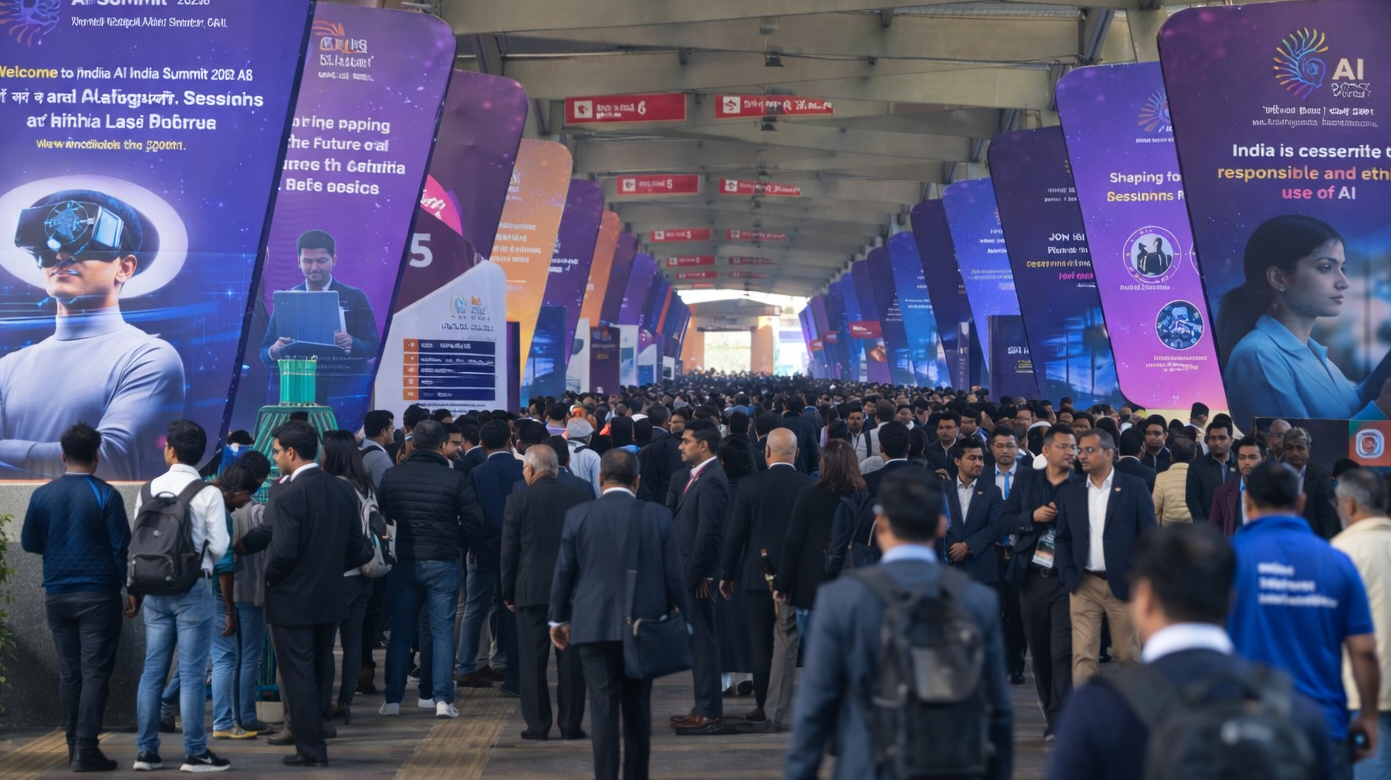
India has emerged as a central player in the global artificial intelligence ecosystem, and the India AI Summit 2026 has further cemented that position. Hosted in India, the landmark event brought together policymakers, global technology executives, investors and AI researchers to discuss the future of artificial intelligence, governance frameworks and inclusive innovation.
Held in New Delhi, the summit saw participation from major technology leaders, including executives from OpenAI and Google, alongside government representatives and international organizations. According to reporting by Reuters, the event focused heavily on AI governance, regulatory collaboration, infrastructure investment, and ethical AI deployment.
The summit marks a pivotal moment not only for India but for the global AI landscape.
Why India Is at the Center of the AI Conversation
Over the past few years, India has rapidly expanded its digital infrastructure, startup ecosystem, and AI research capabilities. With one of the largest pools of software engineers and AI developers in the world, the country is uniquely positioned to influence how AI evolves across emerging and developed markets.
Several factors explain India’s growing AI leadership:
- A vast digital public infrastructure
- Rapid adoption of cloud and AI technologies
- Strong government backing for AI innovation
- A thriving startup ecosystem
- Expanding foreign investment in tech
The 2026 summit highlighted India’s ambition to become not just an AI consumer, but an AI creator and regulator shaping global norms.
Key Themes from the India AI Summit 2026
1. AI Governance and Regulation
One of the central themes of the summit was global AI governance. As AI systems become more powerful, governments worldwide are grappling with regulatory questions around safety, accountability, transparency, and data protection.
Executives from OpenAI and Google emphasized the importance of collaborative regulation rather than fragmented national policies. The discussion centered on:
- Responsible AI deployment
- Transparency in large language models
- Data privacy and protection frameworks
- Cross-border AI governance cooperation
India signaled its intent to contribute actively to international AI rulemaking while balancing innovation and safety.
2. AI for Inclusive Growth
A major highlight of the summit was the focus on AI as a tool for inclusive economic growth. Policymakers discussed how AI can support:
- Healthcare diagnostics in rural areas
- Agricultural optimization
- Language translation across India’s diverse linguistic landscape
- Education access through AI-driven tutoring systems
Unlike many AI discussions that focus solely on advanced economies, India positioned AI as a development multiplier for emerging markets.
This narrative resonated strongly with global investors, who increasingly view India as a scalable testbed for AI solutions across sectors.
3. Infrastructure and Investment
Another key area of discussion was AI infrastructure, including data centers, high-performance computing clusters, and semiconductor supply chains.
As AI models grow more compute-intensive, countries must invest heavily in digital backbone systems. India is actively expanding:
- Cloud infrastructure partnerships
- Domestic AI compute capabilities
- Startup funding ecosystems
- Public-private AI collaborations
Technology giants such as Google reaffirmed their commitment to expanding AI research and cloud investments in the region, further boosting India’s global AI standing.
OpenAI and Google’s Strategic Presence
The presence of OpenAI and Google at the summit was symbolic. Both companies are at the forefront of generative AI innovation and large-scale AI model development.
Their participation underscored three important realities:
- India is a priority market for AI expansion.
- AI governance discussions must include emerging economies.
- Collaboration between governments and private tech firms is essential.
OpenAI highlighted the importance of safe AI scaling, while Google emphasized responsible AI deployment within diverse cultural and regulatory contexts.
Together, these discussions reinforced the idea that AI innovation and governance must evolve simultaneously.
Global Implications of the Summit
The India AI Summit 2026 is more than a regional event, it reflects a broader shift in global technology leadership.
Historically, AI development conversations have been dominated by the United States and parts of Europe. However, India’s growing digital ecosystem and policy momentum indicate a decentralization of AI leadership.
The summit demonstrated that:
- Emerging economies are shaping AI policy.
- Global AI governance requires multi-country collaboration.
- Innovation hubs are diversifying beyond Silicon Valley.
By hosting such a high-profile summit, India has positioned itself as a bridge between developed and developing AI economies.
Challenges Ahead
Despite the optimism, several challenges remain:
- Balancing rapid AI deployment with ethical oversight
- Ensuring equitable access to AI infrastructure
- Managing misinformation and AI misuse
- Addressing workforce reskilling needs
Leaders at the summit acknowledged that while AI offers unprecedented opportunities, it also demands thoughtful governance frameworks.
India’s approach appears to focus on innovation with accountability, a model that could influence other emerging economies.
What This Means for Businesses
For enterprises and startups, the summit sends a clear signal:
AI adoption in India will accelerate.
Businesses operating in India should prepare for:
- Evolving AI compliance regulations
- Expanded government incentives for AI innovation
- Increased competition from AI-native startups
- Greater collaboration opportunities with global tech firms
For multinational companies, India is no longer just an outsourcing destination, it is becoming a core innovation hub.
Conclusion
The India AI Summit 2026 marks a defining moment in the global AI narrative. By bringing together technology leaders, policymakers, and investors, India has demonstrated its commitment to shaping the future of artificial intelligence responsibly and inclusively.
With participation from organizations like OpenAI and Google, the summit highlighted the importance of collaboration, governance, and infrastructure development in building a sustainable AI ecosystem.
As AI continues transforming industries worldwide, India’s leadership role is likely to grow stronger. The summit not only reinforces India’s technological ambitions but also signals a broader global shift, one where AI innovation is increasingly multi-polar, inclusive, and strategically governed.
The world will be watching how India translates these summit discussions into actionable policies and scalable AI ecosystems in the years ahead.